/ 3 min read
Dusk: the ride goes dark, with grain
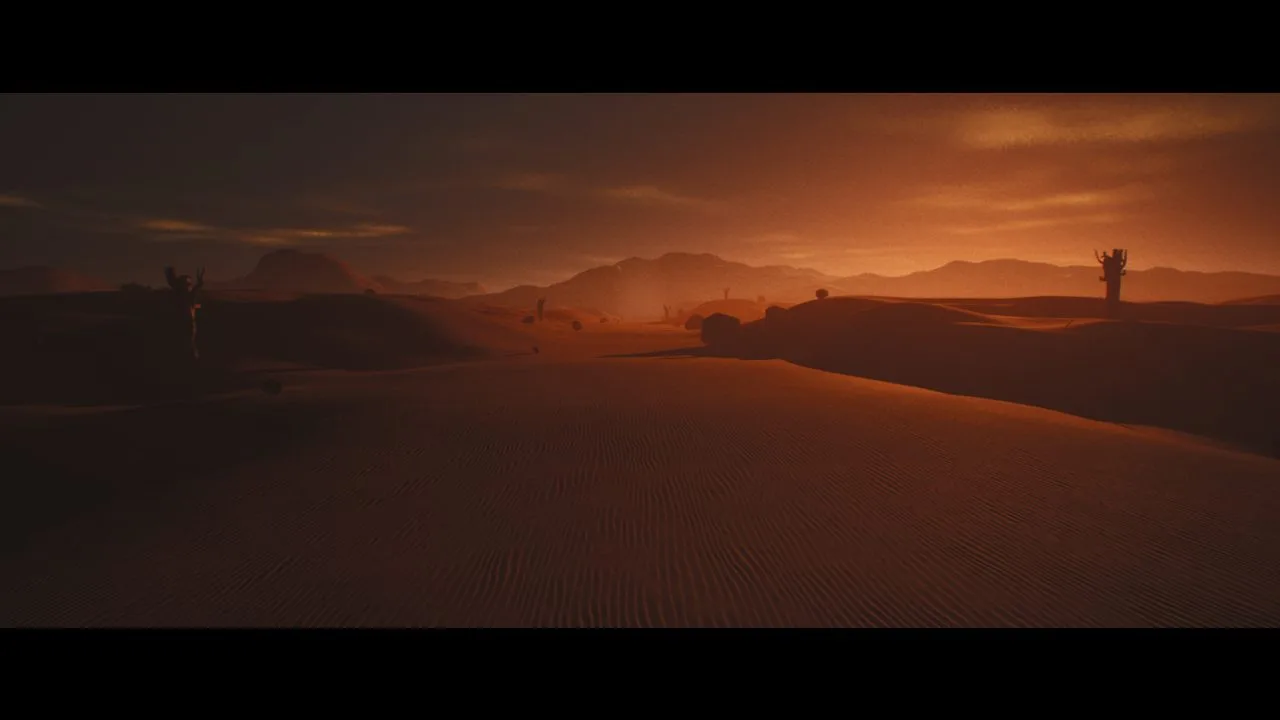
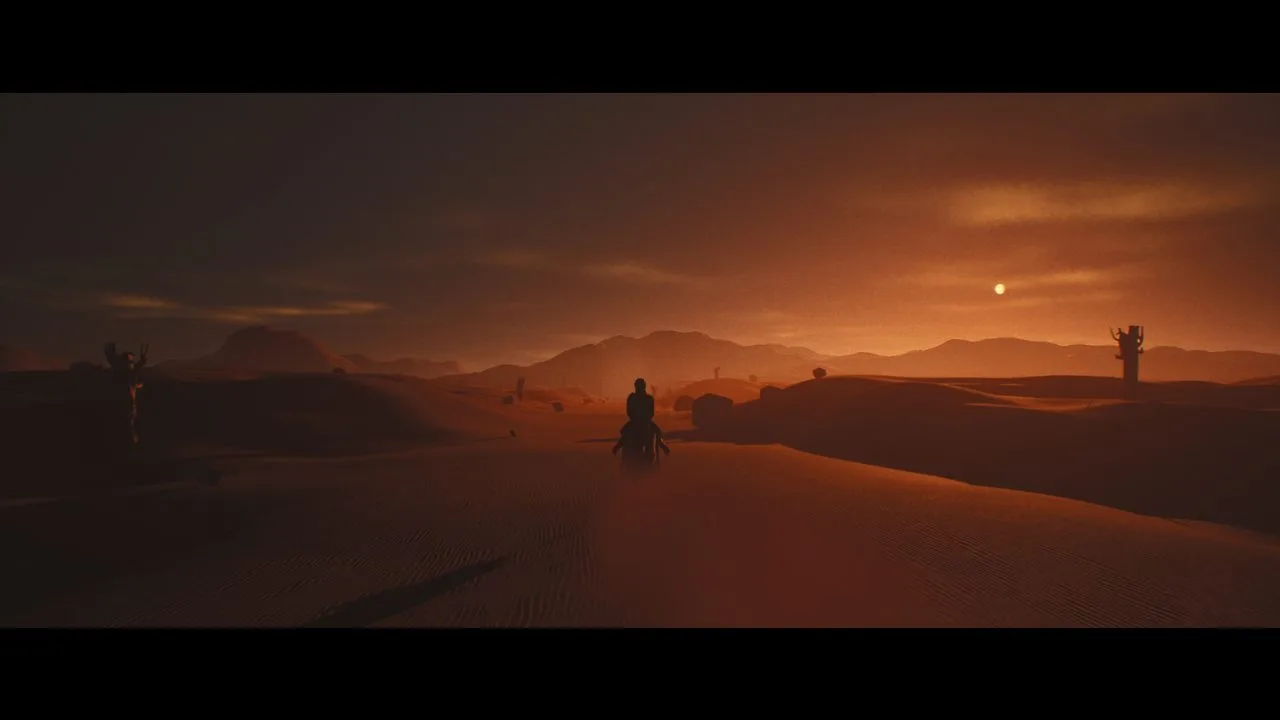
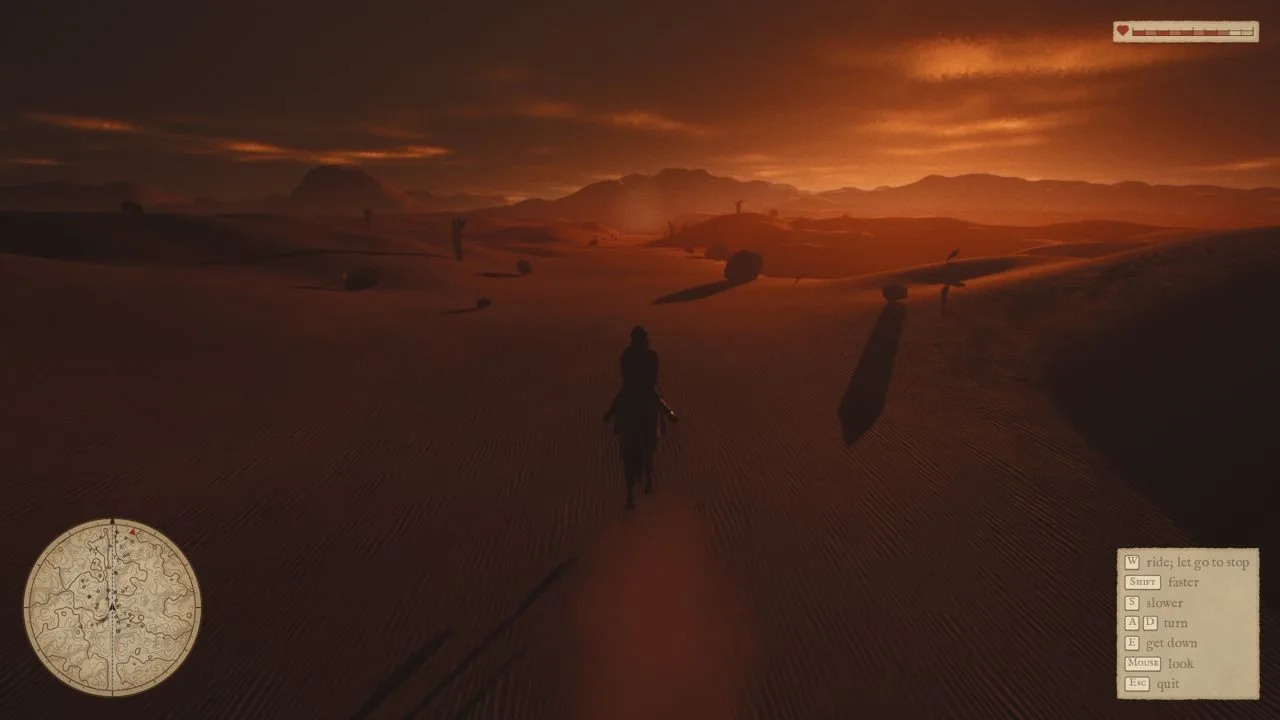
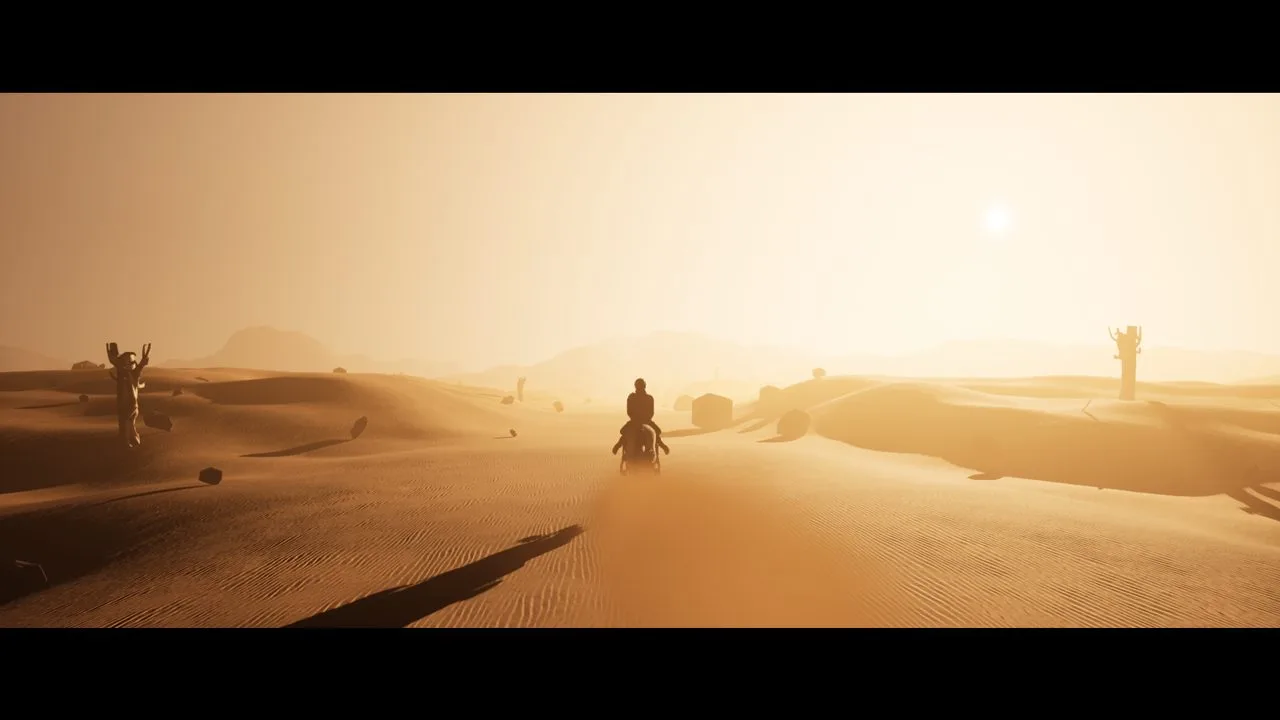
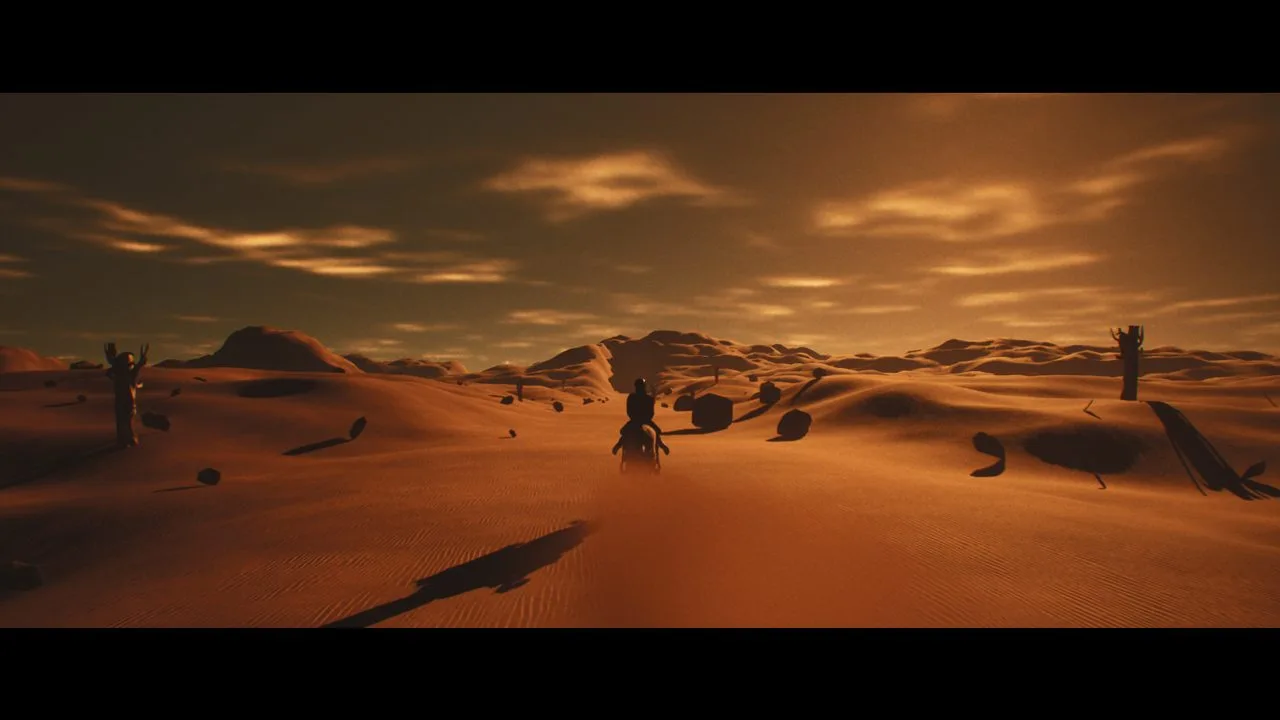
The opening ride was a bright, dusty noon. It's now the last of the day: a low orange sun, a dark ground, a broken cloud deck lit from below, and film grain over all of it. The direction came from one reference photo (a rider at dusk, orange and blue-grey, grainy), and the brief was to go that dark while still being able to see the dust the horse throws.
What changed
- The sun sits at 6° (it was 10°), at 2800 K (4300) and half the light. Below about 3° it drops behind the dune line and the ground goes black. The sky light is up, because at dusk most of what fills the shadows is sky.
- The air. The dust came out of the sky's aerosols and went into the ground fog, which now hugs the ground instead of filling the frame: the far sky stays clear for the clouds. A high aerosol layer (8 km) carries the sunset glow up the sky, behind the deck.
- A cloud deck, Unreal's volumetric clouds with the engine's simple cloud material, low (400 m) and broken. A deck at the usual height was invisible at dusk: unlit, and behind the glow. Low and close, it sits in front of the glow and its undersides catch the last light.
- A touch of blue. The sky away from the sun, the cloud undersides and the haze in shadow are tilted to blue-grey (
SkyBlue), so the orange has something to sit against. The sun, its glow and the ground stay warm. - The grade. Film grain you can see (the engine's grain texture, scaled up), shadows lifted to brown-grey and drained of colour, a little blue tilt in them, a wider bloom, chromatic aberration at the edges, a deeper vignette. All of it is properties on the stage, settable from the command line like everything else (
-LwSet="Grain=0.5,CloudCoverage=0.8").
What took the time
Every attempt to put clouds in a dusk sky gave the same frame: no clouds. The first deck was at 3 km under six times the normal aerial haze, so it was behind the murk. The next was tiled at a fine speckle (the material's scale parameter is in kilometres, and 1 is confetti). Then, at the right scale, a low sun simply doesn't light a cloud 1.5 km up, and the glow we see in the sky at that height is scattered in front of it. The frame only came together once the deck was low enough to be nearer than the glow.
Still to do
- The dust doesn't glow. In the reference the kicked-up dust is the brightest thing in the frame, backlit. Our dust sprites don't scatter the sun forward, so in this light they're a dim plume. That's a change to the Niagara dust material.
- More blue-grey. The touch is there; the reference's clouds are bluer still. A colour LUT built from the reference would take it further without reddening the sun.
Lowwater is in development. These notes capture the game at the time of writing; plans and visuals may change.