/ 2 min read
Prints in the sand
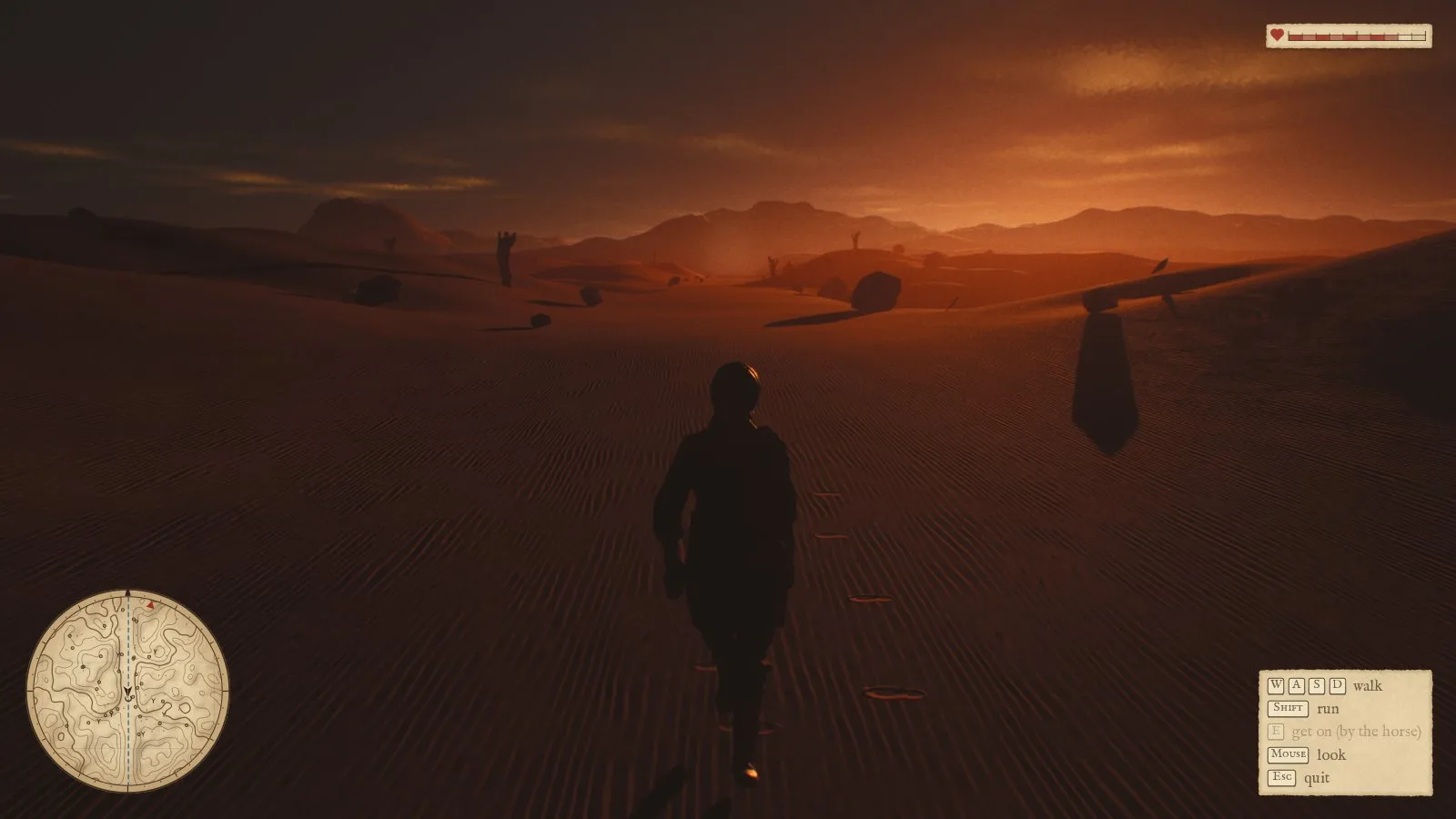
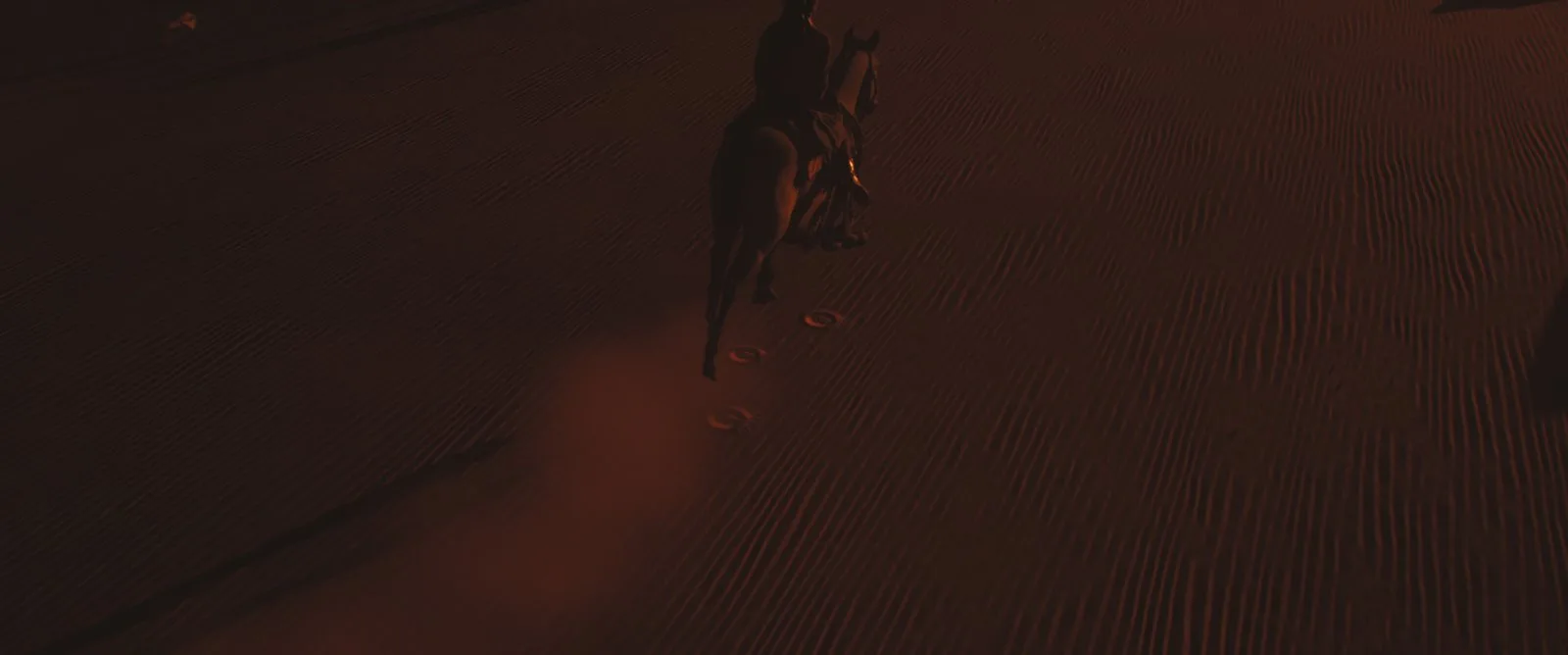
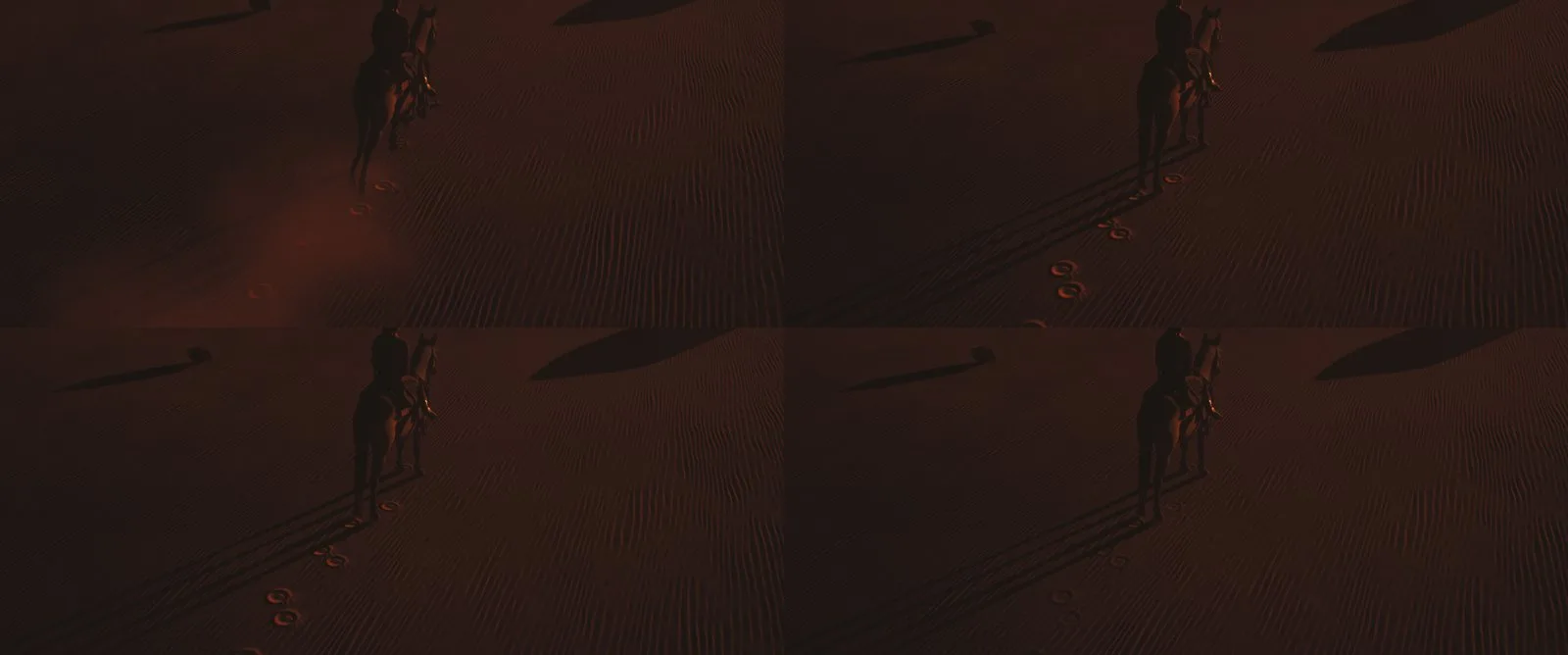
The horse and Ioma now leave tracks. Every hoof that lands and every step she takes presses a print into the sand. Each one holds for a while, then sinks away as the dunes take it back. You get a short trail behind them, about twenty seconds long, not a line back across the whole map.
How it works
- The prints come from the footfalls. The game already knew the moment each hoof and foot touches down, from the bones themselves, because that's what fires the hoof and step sounds. Those same moments now press a print, at the right spot, turned along the direction of travel. A gallop presses deeper than a walk.
- They're dents, not stains. Each print only bends the sand's surface. It doesn't change its colour. Under the low dusk sun that's what reads: the wall facing the sun catches the light and the wall facing away goes dark, just as real tracks do at sunset.
- They fade on their own. The engine fades each print and then removes it. There's a cap on how many exist at once, and the oldest go first.
- The shapes are drawn, not painted. A small script draws each print as a height field: a hoof crater with a raised lip and the sand thrown behind, and a boot with its forefoot, arch and heel. It then turns them into the textures below.

All of it can be tuned like the rest of the stage: how long a print holds, how long it takes to fade, its size and strength (-LwSet="PrintHold=30,PrintStrength=1.5"). A new debug camera looks down from above and behind whoever is moving, so the trail can be checked in a shot.
Still to do
- Her left and right feet use the same print, and front and hind hooves do too.
- A print lying in shadow can't be seen, because it only changes the surface and not the colour. That's right for now, but if tracks should read in the shade, they'll need a soft darkening of their own.
Lowwater is in development. These notes capture the game at the time of writing; plans and visuals may change.