/ 2 min read
The vantage board
The loop is closed. The world is data, the generator turns it into ground, the camera stands wherever a scene might be framed, and now one command shows every one of those places again after a change, next to what it looked like before.
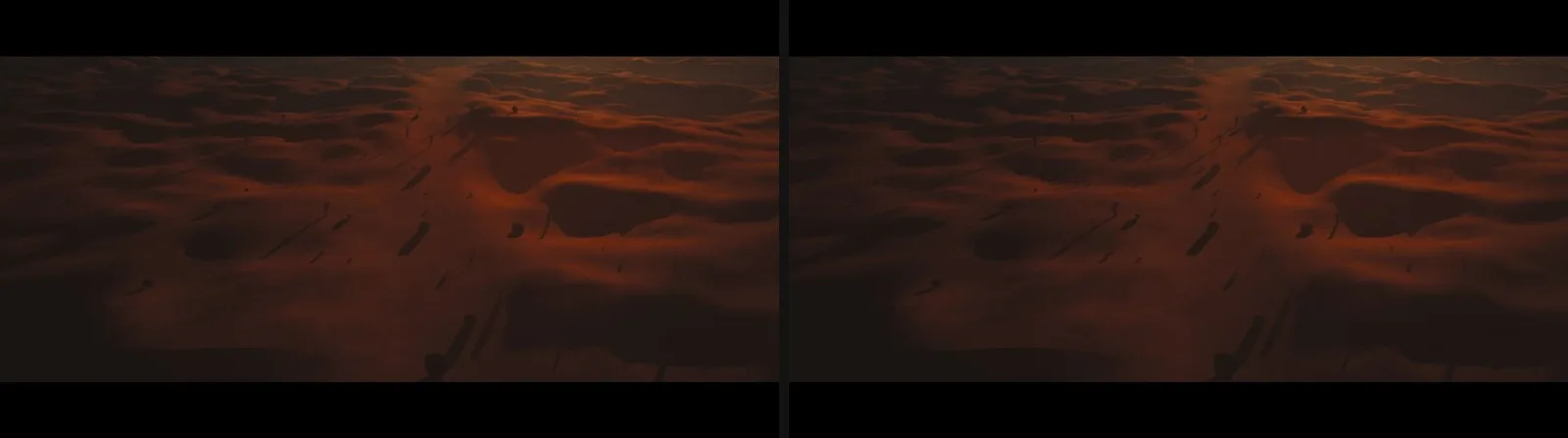
One launch
tools/ue.sh vantages art/world/lowwater starts the game once, detached, and walks the saved vantages: place the camera, give the frame a second at least and then until the engine has brought everything in, write it, next. The board checks each frame against its grab and flags one that is not the vantage's view. Three vantages take fifteen seconds; forty would take a minute. The frames land in a scratch folder. Then the board script turns them into JPEGs under boards/2026-11-01-1/ and writes boards/2026-11-01-1.html.
Three columns
Each vantage is a row. On the left, the grab it was dropped with: what the cinematographer meant. In the middle, the previous round's frame: what the last change did. On the right, this round's. The name and the note sit under them. The first round says "no previous round" in the middle, and a vantage that was written by hand without a grab says so too.
Frames are the look as it is, without the HUD and with the letterbox, so the board shows what a scene framed there would be.
A round
A round is now a folder and a line. The user marks up a sheet, a grab or a board frame and drops it in feedback/ with a date, or pastes it in chat. The agent edits world.json and the vantage notes, writes a line in rounds.md, regenerates, imports the changed tiles, renders the sheet and the board, and shows both. The whole round is committed: the definition, the vantages, the sheet, the board, the line, and the marked-up images. Boards are named by the day and a number; the words about what changed live in rounds.md.
Round 1 is the three starting vantages with nothing changed, the baseline every later round sits beside.
Lowwater is in development. These notes capture the game at the time of writing; plans and visuals may change.