/ 4 min read
The camp at The Source
The first campaign goal. The hydrology already agreed with the story without being told to: The Source sits on the west bank of a 33 m river bed that the Narrows sink drains dry before it arrives, and the nearest live water is 2.6 km upstream. So the goal is to ride 2.1 km north from the start and find the people who are trying to find water again, settled for the night.
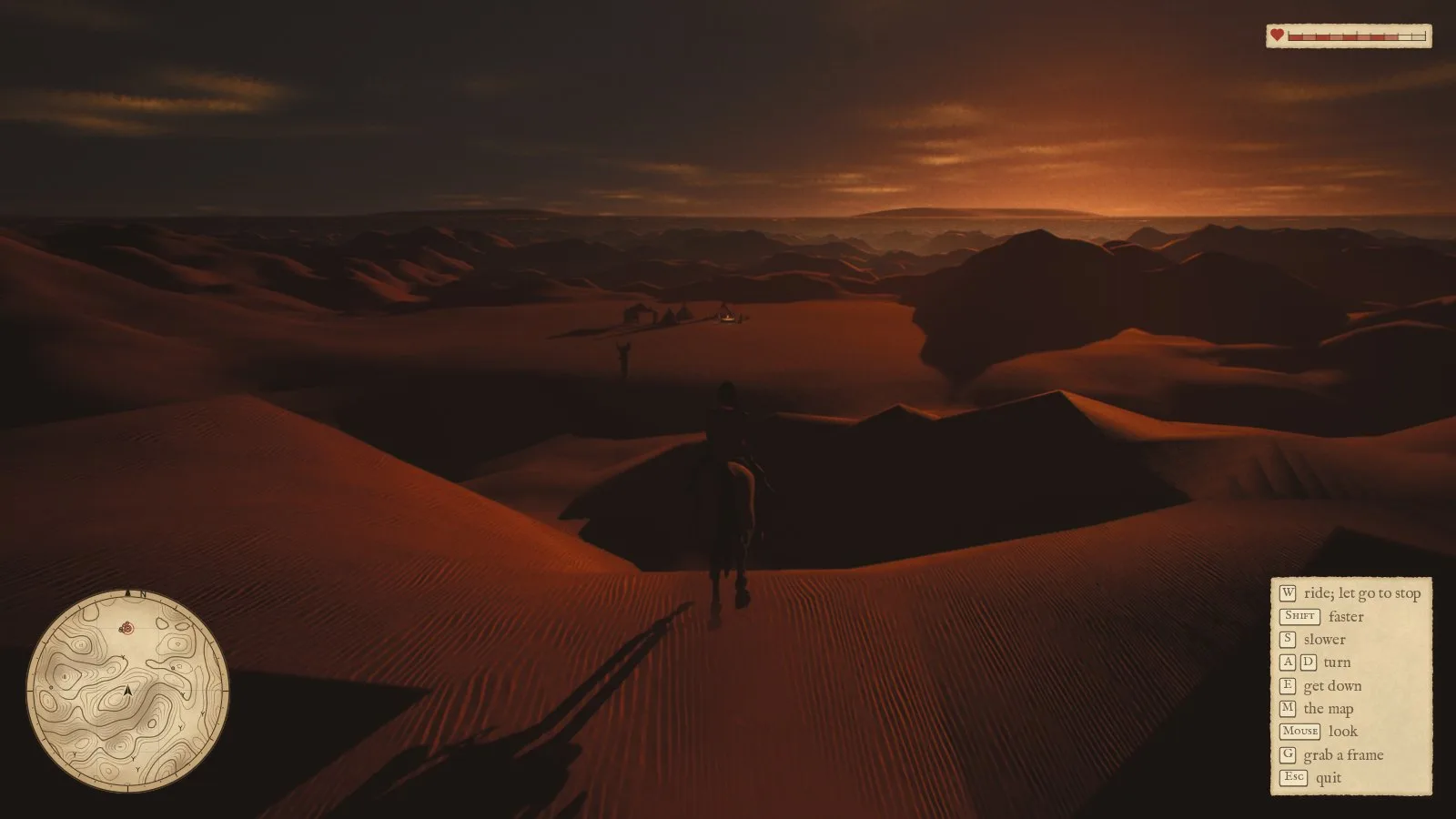
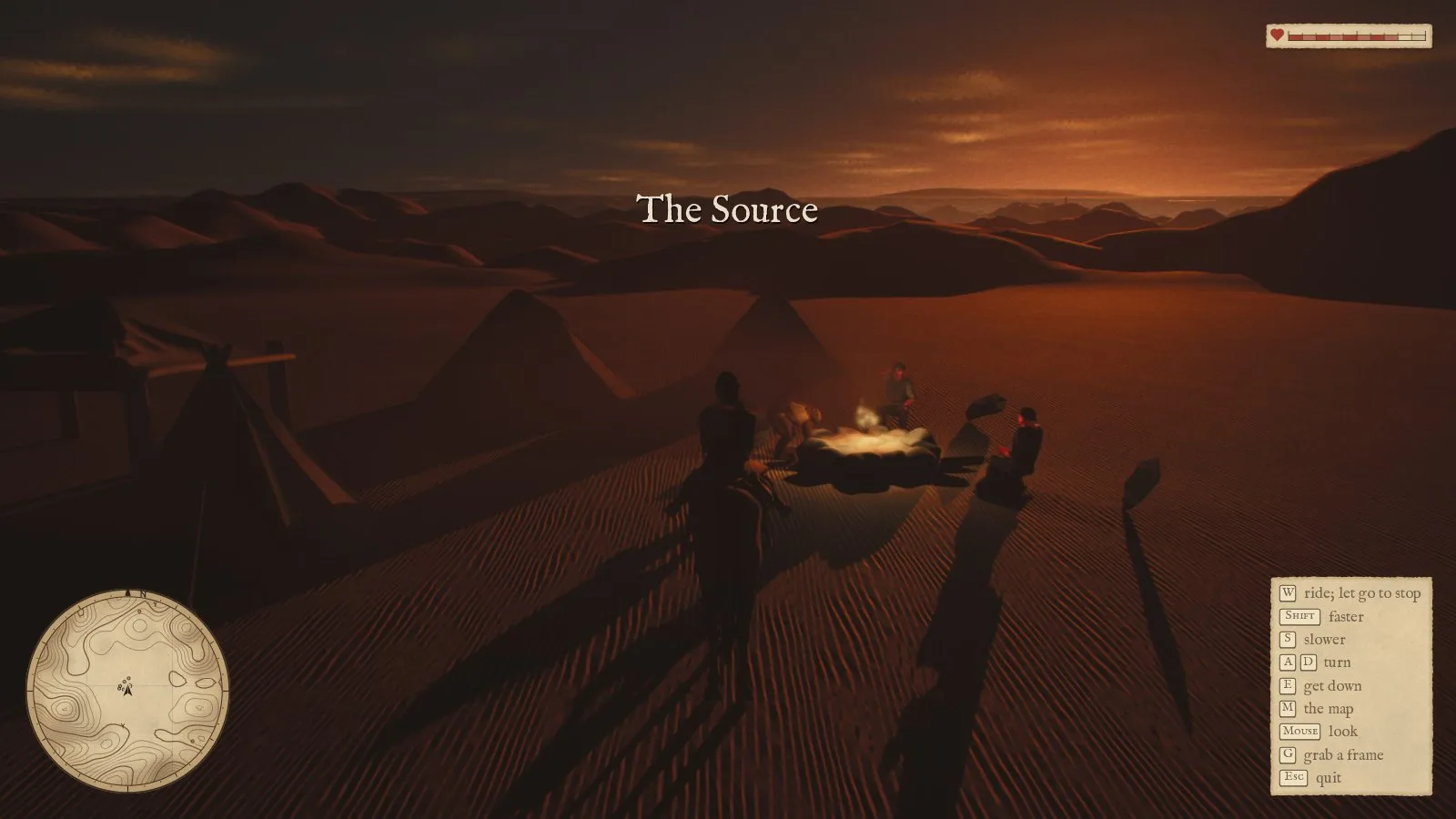
Coming over the dunes from the south: the fire among the tents is the mark.
What landed
The fence came off. The ride stopped everything at 900 m from the start. The sim's scene gained a rectangle boundary beside the circle, and an obstacle source: the world's scatter is 322k items, so the sim asks the stage for a 128 m cell's trees and rocks when a unit first enters it and caches the answer. The cache is scene data, not state; nothing of tile timing enters the command log or the hash, and a replay names the world it ran against. The mount clamps to the world's rectangle; obstacles and survey marks stream with the tiles (one set per loaded tile, shared between the minimap's sheet and the world sheet); the minimap draws from the world survey once she leaves the local sheet.
The objective names a place. ObjectivePlace=the-source by default: the reach is the place's radius (40 m), no
disc is drawn (the camp is the mark), the notice reads "The Source". A point objective with its disc is still there
behind ObjectivePlace=.
A dressing file per place. art/world/lowwater/dressing/the-source.json: three tents in an arc open east toward
the bed, the hearth in the gap, the awning and rack behind, a waterskin, a scoop, two boulders for seats, and three
people. The stage spawns it on the real ground at start; the tents are obstacles and marks.
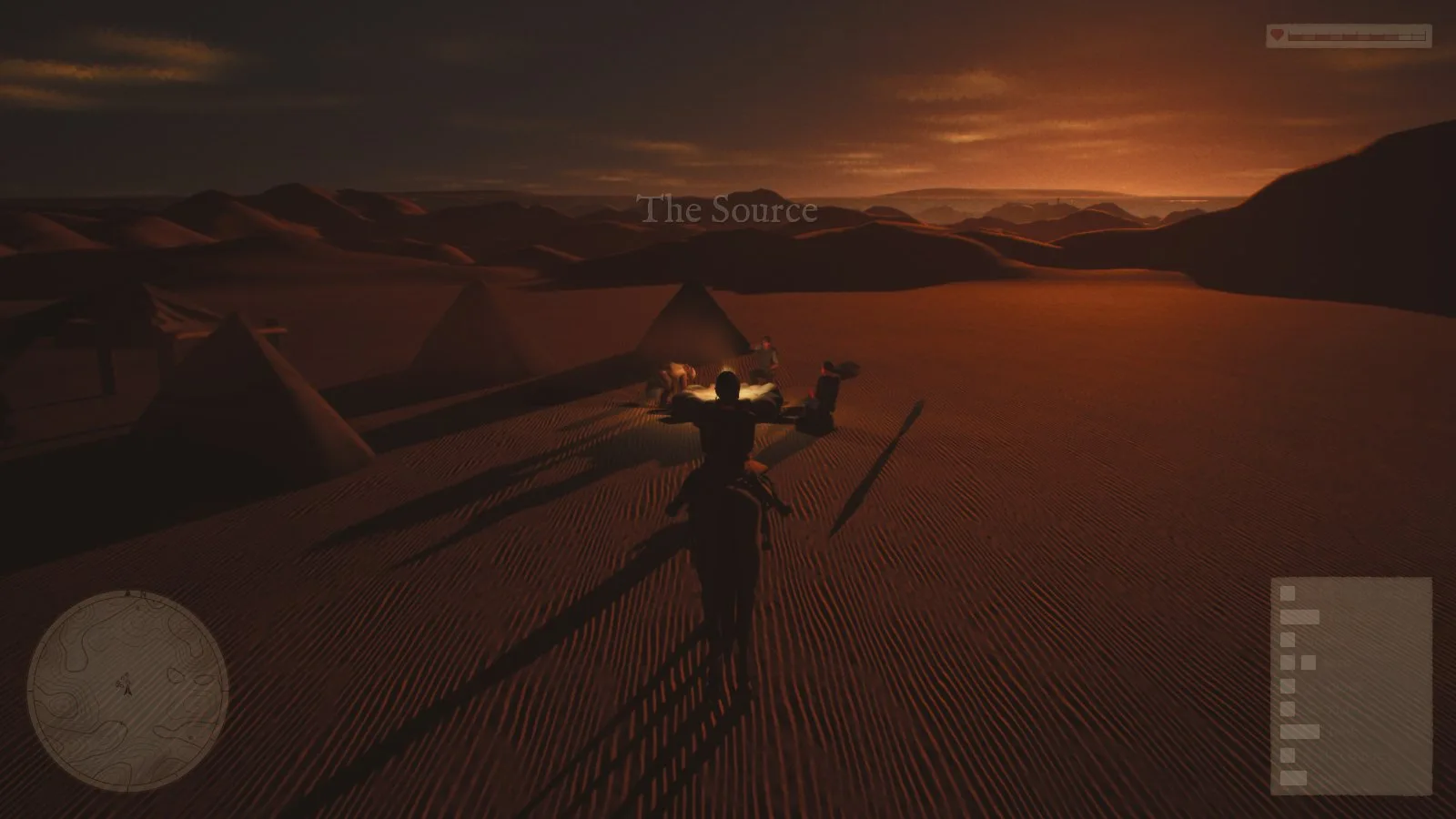
Riding in at the place's radius: the notice, the fire, the three of them.
The fire. NS_Campfire, authored over MCP like the dust: flame sprites, embers, a smoke column that leans with
the wind. At the fixed EV 12 the first numbers vanished: the lamp went from 800 to 10,000 candelas and the flame's
emissive from 40 to 1,200 before either read. The fire is pre-warmed at build so a frozen scene (the vantage board's)
shows it burning, and it pauses with the scene. A crackle at the hearth, scratch from gen_audio.py, measured in a
listen rather than heard: the share of energy above 8 kHz goes from nothing muted to 0.04 at the kept gain, under
a wind bed that holds the rest. The fire costs 0.6 ms a frame at the camp (14.1 ms against 13.5).
The people. AFigure: a poseable mesh of one of our rigs looping one clip, no animation Blueprint. The mother's
rig stokes the fire; the wellwright's rig sits cross-legged and drinks. The people step of build_ride.py imports
whatever the dressings name.
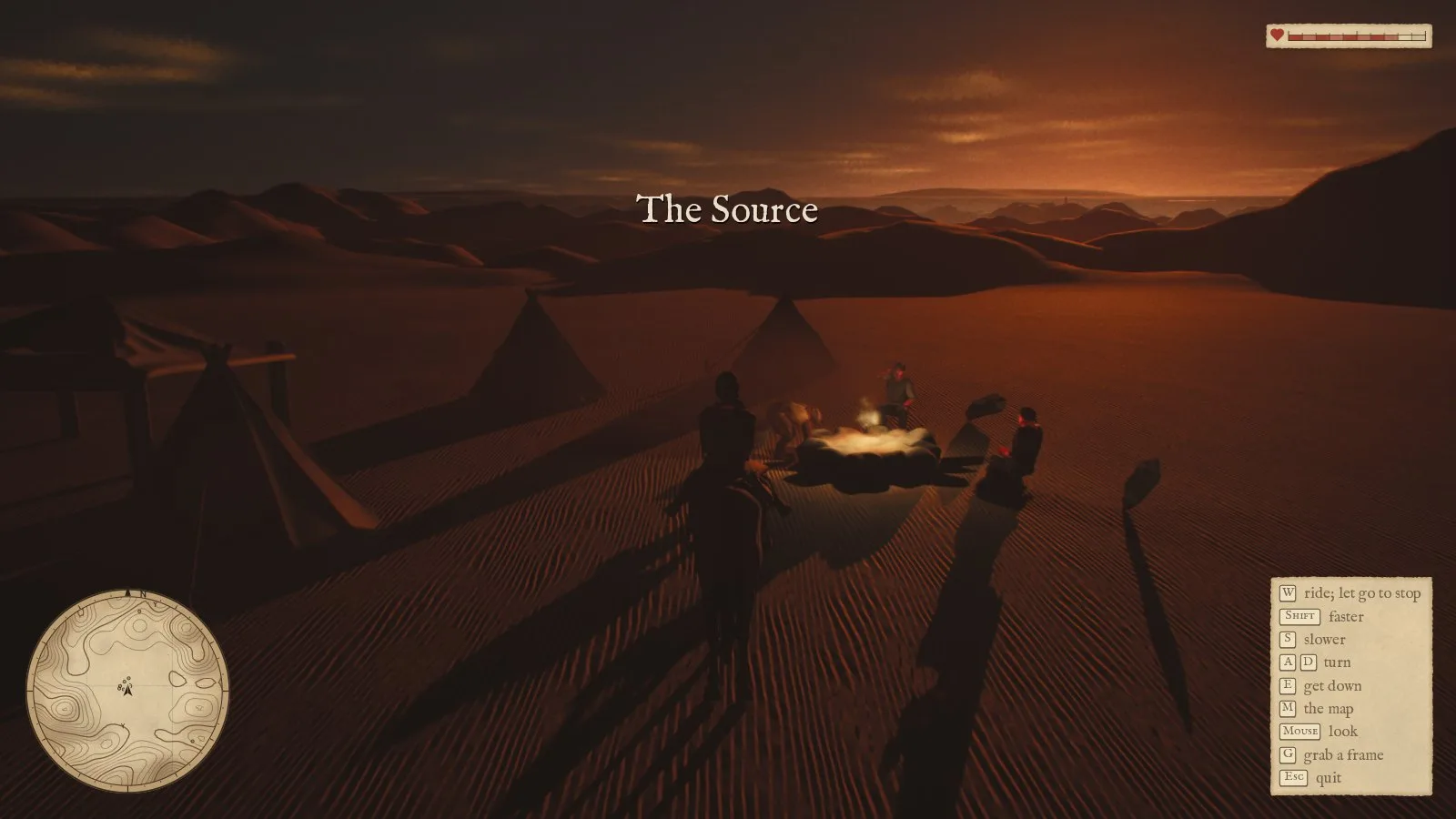
The camp from the saddle, with the tent as it is now.
The tent
The tent we had was the painted sprite through image-to-3D: a faceted pyramid with a flat base and no door.
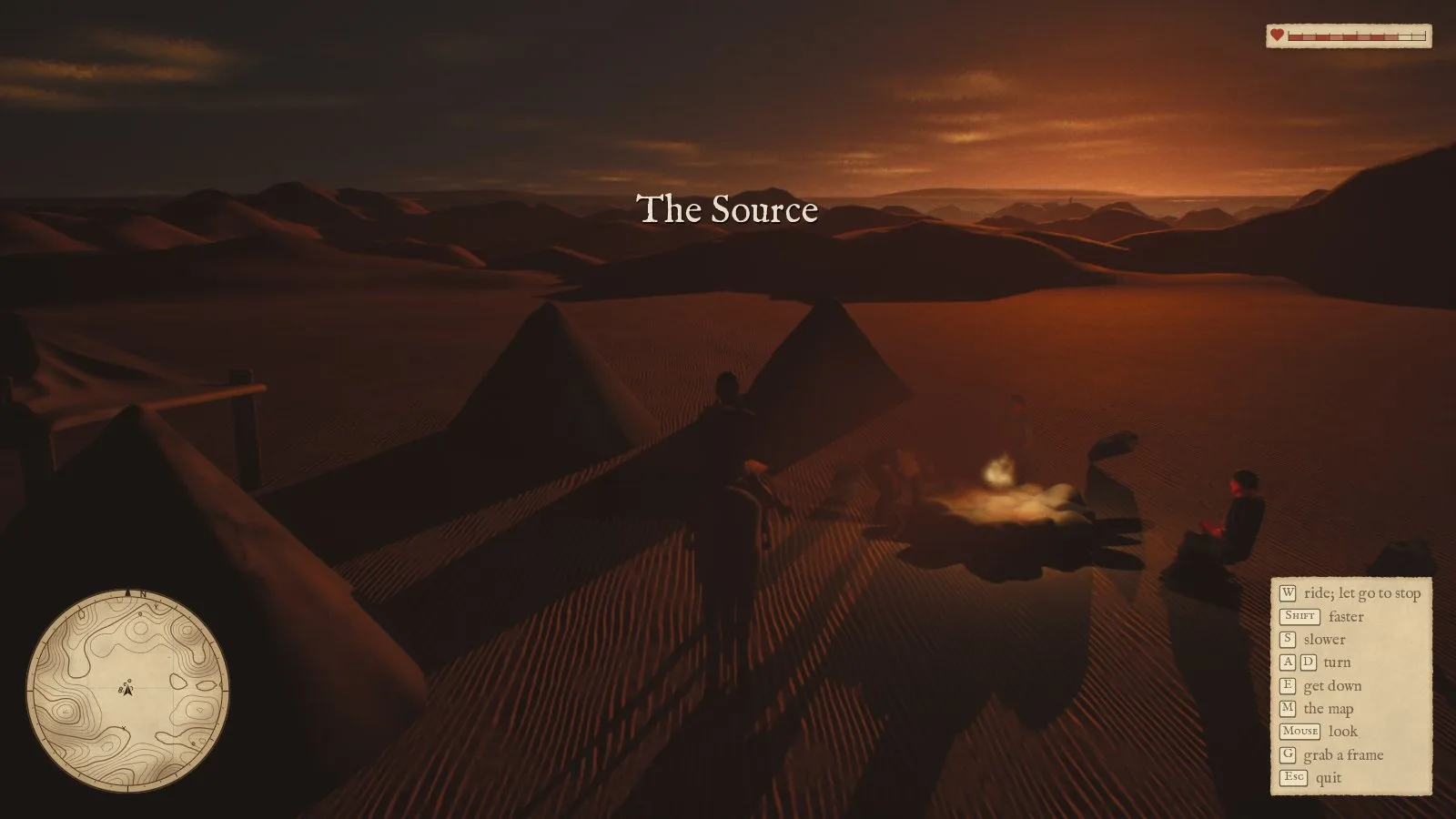
The sprite was repainted to a three-quarter view with its flap open (nano-banana-pro/edit, the prompt kept in the 3D manifest) and generated again; a trellis2 try of the first sprite went in beside it (it needed a Blender re-export for its WebP textures). One of each stood in the camp for one frame:
Left to right: the repaint through hunyuan, the first sprite through trellis2, the tent as it was.
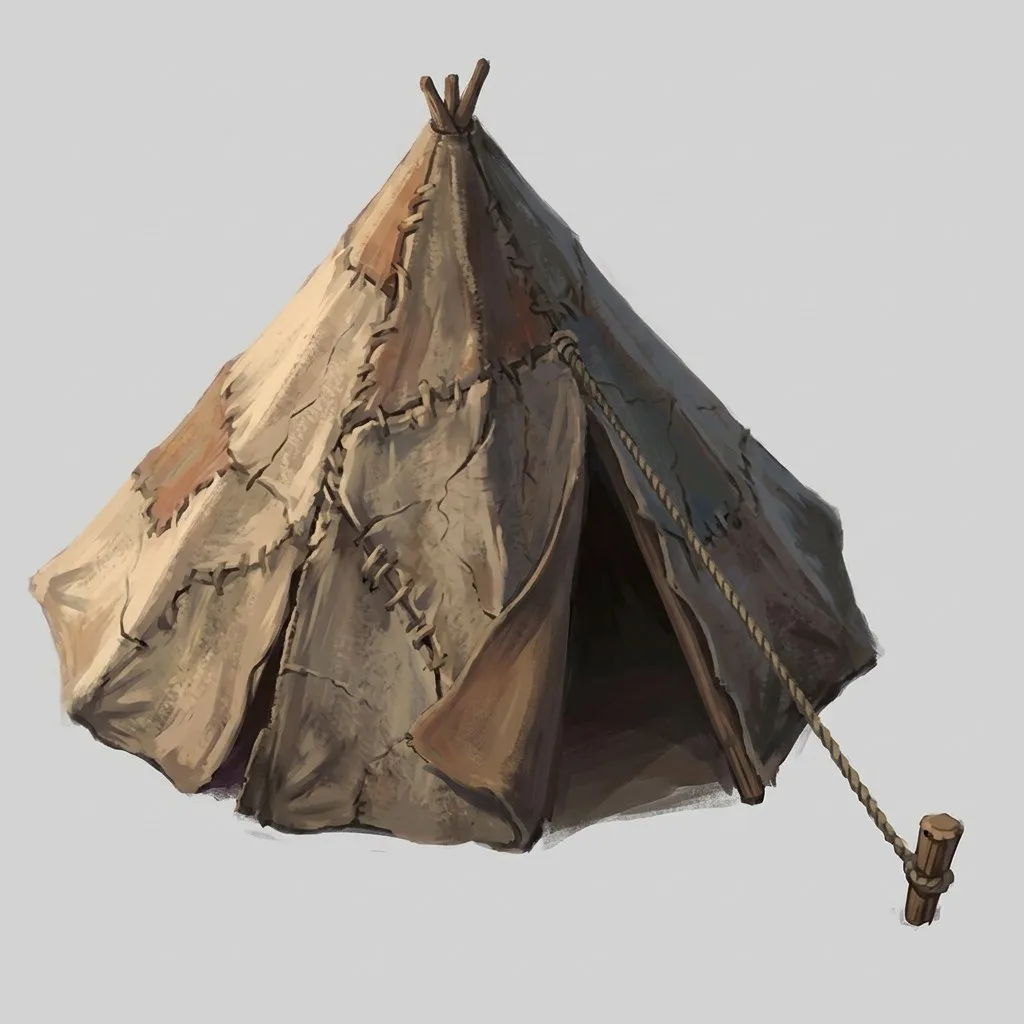
The repaint won: a cone of stitched hides with crossed poles, a flap and a guy rope to a peg, against two pyramids.
Board: art/world/lowwater/boards/2026-11-03-tent.html.
From the approach
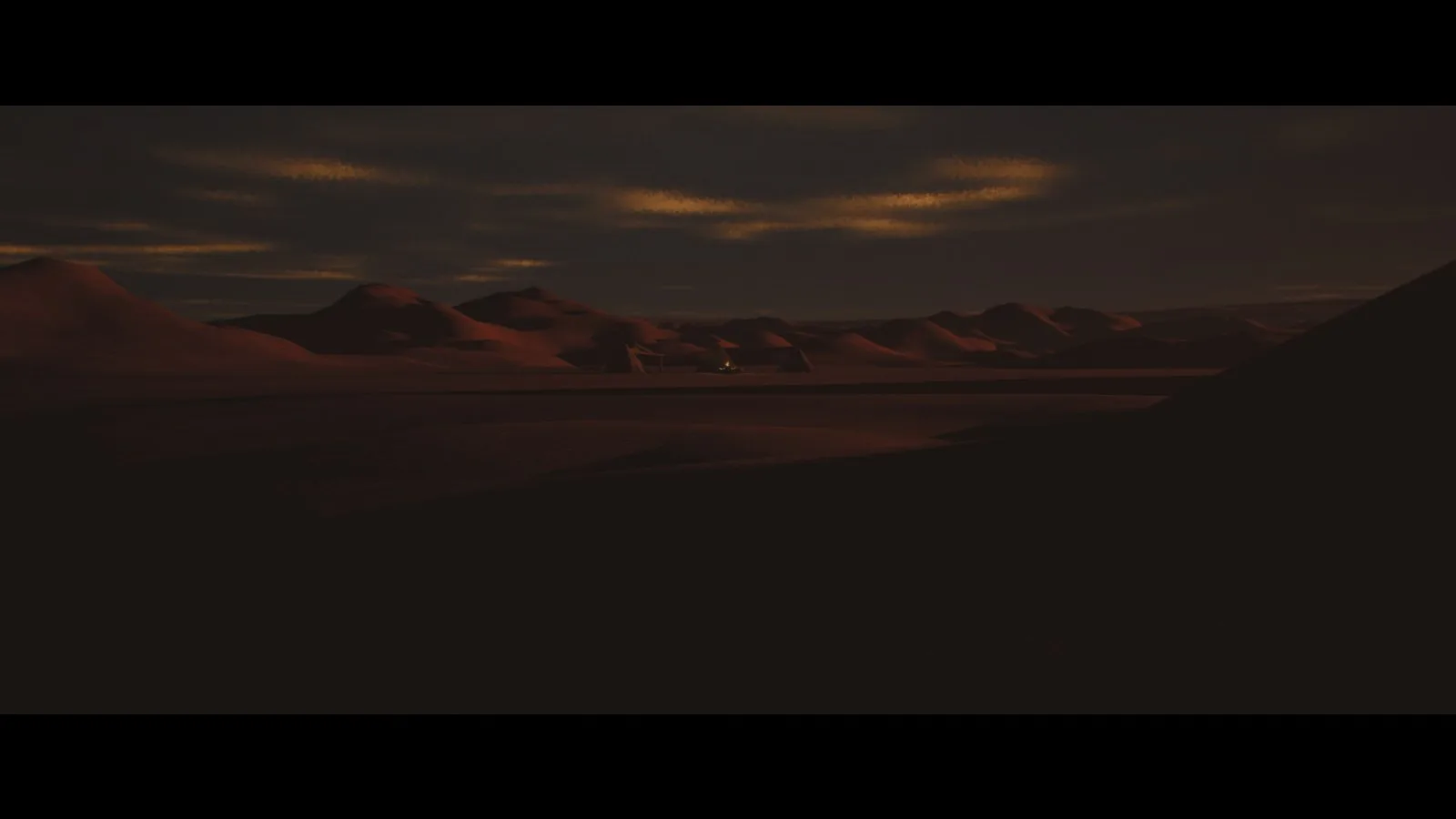
The bank's edge 65 m south-east of the hearth, the new source-approach vantage. The camp sits in a hollow: dunes
of 14 to 15 m stand 40 m out on every side, so from the dry bed itself, at eye height, there is no view of it; this is
where it first shows on the way in.
Open
- The tents' door flaps should face the hearth; the generated mesh's door direction is unknown, so each tent's
yawwants setting by eye in play. - The flame is small from the saddle; the crackle sits under the wind. Both are tunables.
- The
sit_drinkclip stands the wellwright up. A seated clip from the rig may read better. - The designed look of the camp waits on the Ashfold camp reference board; dialogue is the campfire-scene item; night is a later call (a cut, or the sky).
Lowwater is in development. These notes capture the game at the time of writing; plans and visuals may change.